The ruling in Puterbaugh v. Kars4Kids raised questions about how Kars4Kids works and where donations go. Here are the answers, including the facts the ruling left out.
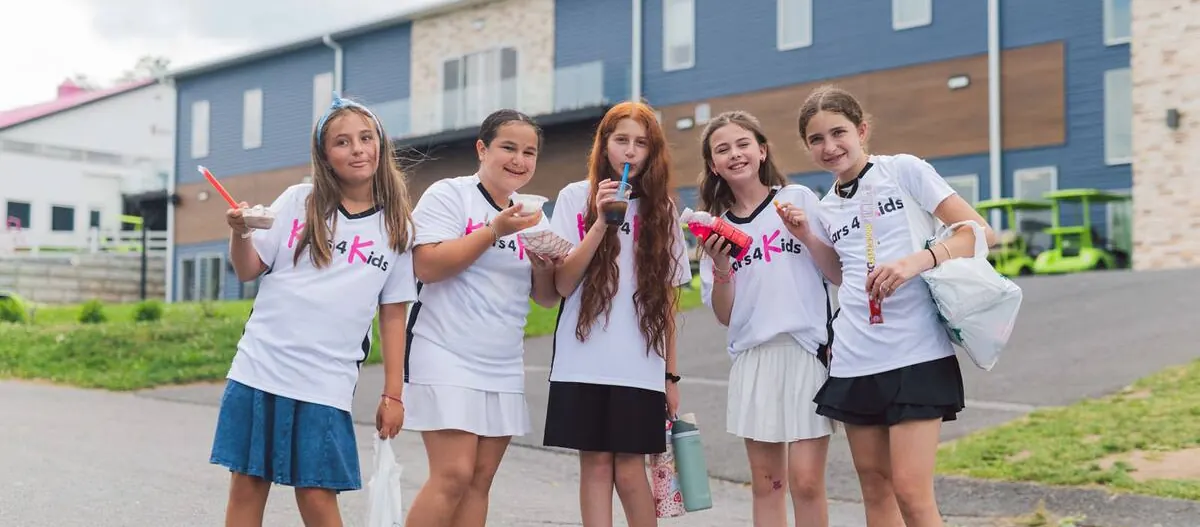
Summer at camp, supported by Kars4Kids donations.
01
Does Kars4Kids support children in California?
Yes, hundreds of them.
The facts
Donations to Kars4Kids support California children, as well as children across the US, through programs run by our sister charity Oorah, including mentorship, tuition assistance, after-school programs, and summer camp. Our small-grant program has also funded numerous California charities over the years. The backpack giveaway is one small, separate program.
What the ruling got wrongThe court incorrectly cited a giveaway of about 1,000 backpacks as Kars4Kids' only California activity.
02
How much goes to advertising and administration?
Our expense ratios reflect an efficient operation.
The facts
Advertising sustains the donation program and gets people to donate a vehicle rather than junk it. Our in-house team keeps those costs as low as possible. At 6% administrative overhead, Kars4Kids runs leaner than the vast majority of charities of comparable size.
What the ruling got wrongThe court cited 30% of spending on “in-house advertising” and 6% on administration.
03
Does the ad need to say Kars4Kids is a Jewish organization?
No. The website makes that immediately clear.
The facts
A short broadcast ad exists simply to bring an organization to the viewer’s attention. Our ad is built to be catchy and memorable. It does not purport to give any information about the charity’s mission and programs. The ad is not designed to replace the website it directs viewers to, where they can become fully informed before donating. The same information is available by phone.
What the ruling got wrongThe court noted that the ad doesn't use the word "Jewish" and observed that a donor would have to visit the website for substantive information about the mission, as if that were problematic.
04
Do donations reach children, including children in need?
Yes. Children are the primary beneficiaries of Kars4Kids donations.
The facts
The court heard limited testimony on this question. Here are the facts:
~2,200
Students
Through its sister charity Oorah, Kars4Kids provides significant financial assistance to about 2,200 preschool, elementary, and high school students ages 5 to 17, attending more than 250 schools across the U.S. and Canada.
3,500+
Registered participants
Oorah runs free extracurricular programming for children ages 8 to 15 in more than 80 locations across 20 states, with over 3,500 registered participants.
Hundreds
Campers each summer
Hundreds of boys and girls ages 8 to 17 attend Oorah's sleepaway camp, TheZone, each summer.
Hundreds
Mentored one-on-one
Hundreds more children ages 10 to 17 receive free one-on-one mentorship and tutoring.
Poverty relief isn't Kars4Kids' mission, but many children in these programs come from lower-income homes or face challenging family circumstances. The ad itself implies no claims at all about the kids being helped.
What the ruling got wrongThe court wrongly concluded that children, especially needy children, aren't the recipients of donations, and pointed to gap-year trips to Israel and real estate holdings as contradictions to the ad’s supposed ‘needy child’ persona.
05
Why do you also help adults if you advertise as a kids charity?
Children are the primary beneficiaries, and the work doesn't stop at the child.
The facts
Oorah's programs are built to follow a child from early childhood into young adulthood, and they engage parents and families along the way. That's how youth charities create lasting impact. The kids in the ad are clearly cast actors playing a band, not intended to look like specific program recipients.
What the ruling got wrongThe court claimed the name, the child actors, and the jingle all reinforce the belief that donations are used exclusively for children.
06
Why did Oorah buy a building in Israel?
It's a home base for American students in gap-year programs between high school and college.
The facts
Some of the students in Oorah’s youth programs choose to take a gap year earning credits in accredited institutions in Israel before returning to continue their college education. Oorah has a program that provides support to those students while they are abroad.
What the ruling got wrongThe court cited a building purchased in Israel, with no further context.
07
Why does Oorah hold $199 million in set-aside assets?
Most of it is facilities used for Oorah's programs.
The facts
Oorah also maintains an endowment so it can maintain its multiyear commitments to the children in its programs. Only a minority of each year's funds go into it. Our priority is to sustainably maximize our impact on the children and families we serve.
08
Are Oorah's programs really about children?
Yes. Work with children is the heart of Oorah's mission.
The facts
Gap-year, matchmaking, and mentorship programs are a small slice of what donations support, and they grow out of relationships that begin in childhood. The bigger story is the hundreds of thousands of children Kars4Kids donations have helped.
What the ruling got wrongThe court ignored most of Oorah and Kars4Kids’ charity work, and only highlighted matchmaking for young adults and gap-year trips for 17- and 18-year-olds.
Please read these Donation Terms and Conditions ("Terms") carefully as they govern your use of the Kars4Kids website and any donation through the website. By accessing, using, or proceeding with your donation through the website, you agree to follow and be bound by these Terms. IF YOU DO NOT AGREE TO BE BOUND BY ALL OF THESE TERMS, INCLUDING YOUR AGREEMENT TO RESOLVE DISPUTES ONLY BY FINAL AND BINDING INDIVIDUAL ARBITRATION AND TO WAIVE YOUR RIGHT TO A JURY TRIAL OR TO BRING A CLASS ACTION, DO NOT USE THE WEBSITE OR PROCEED WITH YOUR DONATION.
By submitting your donation, you as the donor confirm that:
All information provided about the vehicle (make, model, year, mileage, condition) is accurate and complete.
The donor is the legal owner of the vehicle or has authority to donate on the owner's behalf, and any liens or encumbrances have been fully disclosed to the organization.
The donor will transfer the title and ownership to the organization upon acceptance, signing any necessary documents to complete the process.
The organization may reassign, sell, or otherwise dispose of the vehicle at its discretion to support its charitable programs. The vehicle is accepted "as is" with no warranties, guarantees, or value representations.
This agreement is governed by New Jersey law, except that the Federal Arbitration Act governs the parties’ arbitration agreement. BOTH PARTIES WAIVE THEIR RIGHT TO A JURY TRIAL AND CLASS OR COLLECTIVE ACTION, AND ANY DISPUTES WILL BE SETTLED INDIVIDUALLY THROUGH BINDING ARBITRATION, AS FURTHER DETAILED BELOW.
By donating the vehicle, the donor acknowledges they have read, understood, and agreed to these terms and conditions.
DISPUTE RESOLUTION: PLEASE READ THIS SECTION CAREFULLY AS IT LIMITS CERTAIN OF YOUR RIGHTS, INCLUDING THE RIGHT TO A JURY TRIAL, THE RIGHT TO MAINTAIN A COURT ACTION, AND THE RIGHT TO PARTICIPATE IN ANY CLASS, COLLECTIVE, OR REPRESENTATIVE ACTION.
Notice of Dispute: If you or Kars4Kids have any dispute of any kind with the other, both parties agree to attempt to resolve the dispute informally by providing a detailed written notice with name, telephone number, mailing address and email address of the party providing notice, and a statement summarizing the dispute, including the legal claims asserted, the factual basis for the claims, and a description of the remedy sought. The parties agree to make a good faith attempt to resolve the noticed dispute for a period of sixty (60) days. The statute of limitations for any claim will be tolled during this informal dispute resolution process. It is a material breach of this agreement to initiate an arbitration without first completing this informal notice and dispute resolution process.
Arbitration Agreement: If the parties are unable to resolve their dispute informally, the parties agree that all disputes, whether based on contract, tort, statute, fraud, misrepresentation, or any other legal theory, arising out of or relating to your use of the website or any donation through Kars4Kids, will be resolved only by final and binding individual arbitration in the county where you reside or in New Jersey. The sole exception to this arbitration agreement is for an action initiated and remaining in small claims court. You understand that this means you waive your right to a jury trial and waive any right to bring or participate in a class or collective action or make any claim on a representative basis. You understand that there is no jury, limited discovery, and limited appellate review in arbitration. Arbitration shall be administered by the Judicial Arbitration and Mediation Services, Inc. (JAMS) pursuant to the applicable JAMS rules, including the JAMS Streamlined Arbitration Rules & Procedures or the JAMS Policy on Consumer Arbitrations and the associated Minimum Standards to the extent they apply, or as modified by these Terms. The arbitration will be conducted by a single arbitrator and will take place telephonically unless an in-person hearing is requested by either party. The JAMS Rules, fee information, and instructions to initiate arbitration are available on the JAMS website at https://www.jamsadr.com/.
There is no judge or jury in arbitration, and court review of an arbitration award is limited. An arbitrator may, however, award the same individual relief and damages as a court, including injunctive, declaratory, and statutory relief, and is required to adhere to the provisions of these Terms. An arbitrator may not, however, order representative relief or relief that would benefit anyone other than the individual arbitrating party. Each party shall be responsible for its own attorneys’ fees and costs in arbitration, unless otherwise authorized or required by law or the JAMS Rules. A party shall also be entitled to recover its attorneys’ fees and costs in the event the arbitrator determines that a claim made against it was frivolous or brought for an improper purpose or in bad faith. Notwithstanding anything to the contrary, Kars4Kids will pay all fees and costs that it is required by law to pay.
Class Action Waiver: TO THE FULLEST EXTENT PERMITTED BY APPLICABLE LAW, THE PARTIES AGREE THAT ANY AND ALL DISPUTES SHALL BE RESOLVED ON AN INDIVIDUAL BASIS ONLY, AND NOT AS A PLAINTIFF OR CLASS MEMBER IN ANY PURPORTED CLASS, COLLECTIVE, OR REPRESENTATIVE PROCEEDING. THE PARTIES AGREE NOT TO, AND EXPRESSLY WAIVE ANY RIGHT TO, FILE A CLASS ACTION OR SEEK RELIEF ON A CLASS, COLLECTIVE, OR REPRESENTATIVE BASIS. NO ARBITRATION MAY BE COMBINED WITH ANOTHER WITHOUT THE PRIOR WRITTEN CONSENT OF ALL PARTIES INVOLVED.
 EN



 Call